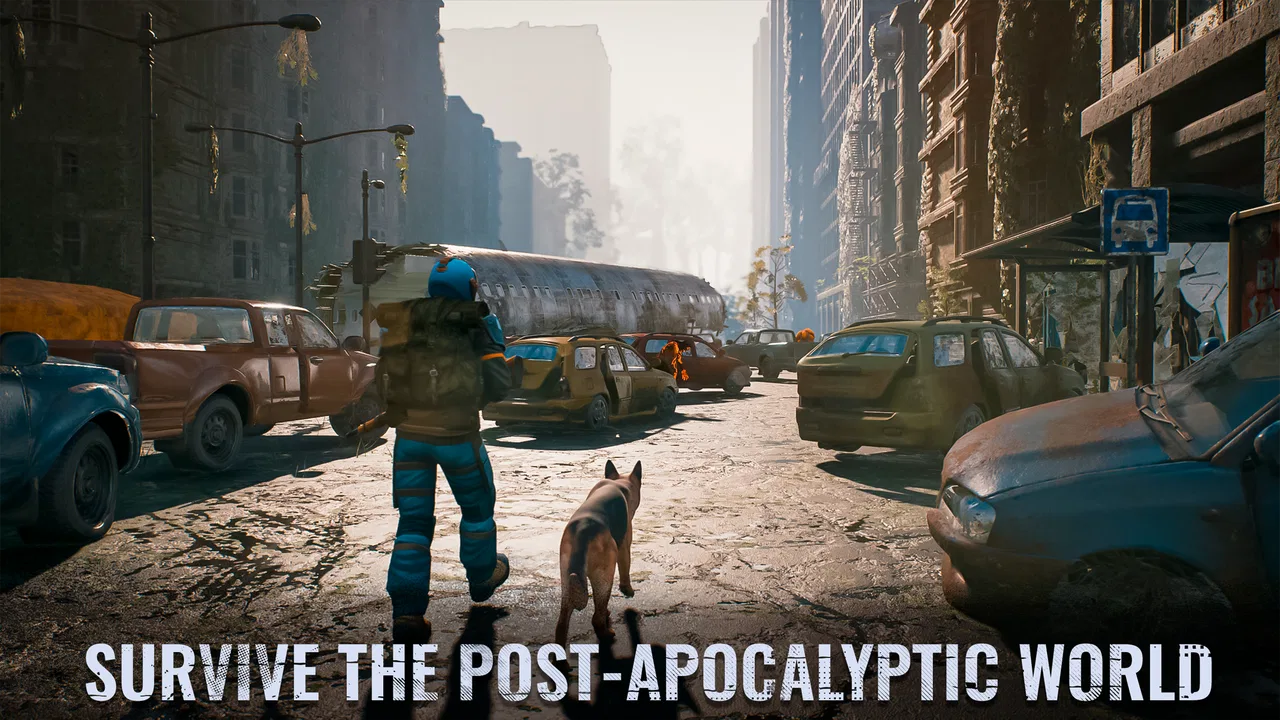
Days After: Zombie Survival
- 4.5
- Rating
- 10.00M
- Installs
- Free
- Price

 Analysis by App-foxy
I spent time with Days After: Zombie Survival as a mobile survival simulation, and my first impression was that it wants more from me than simply tapping through a string of missions. The world is dangerous, supplies matter, and even a short trip away from safety can become a decision about whether the possible reward is worth the risk. That tension is the main reason I kept returning.
The basic premise is familiar: civilization has collapsed, zombies are everywhere, and I have to build a workable life from whatever can be gathered, crafted, or recovered. What makes the experience interesting is the constant pressure between immediate needs and longer-term progress. I may want to explore a new area, but spending health, equipment durability, food, or healing items carelessly can make the next objective much harder.
This is a free simulation game from MY.GAMES VENTURE CAPITAL LTD, aimed at Teen players. It has reached over 10 million installs, with a 4.5 average from around 217 thousand ratings and roughly 11 thousand written reviews. Those numbers fit my experience: it is a recognizable, established mobile survival game rather than a tiny experiment, but it still has the friction and monetization choices that come with a free-to-play design.
You May Also Like

 Blood Strike: 2.5 Anniversary
Blood Strike’s Loadouts Turn Every Drop Into a Tactical Gamble
A close look at Blood Strike’s custom loadouts: how fast access to signature weapons reshapes its battle royale rhythm, rewards preparation, and narrows the gap between fights.

 Pandora - Music & Podcasts
Pandora’s Music Is Easy to Start, but Harder to Recover
Pandora’s strength is its low-effort path from a seed to a station. Its weak spot is how much confidence it asks you to place in connection, setup, and quiet recovery.

 8 Ball Pool
 Is Built on Rivalries, Rematches, and Routine
A close look at the rivalries, rematches, shared routines, and unanswered safety questions that turn a quick pool match into a persistent mobile community.

 Samsung Music
’s Quiet Strength Is Playing What You Already Own
Its reach comes less from spectacle than from dependable access to a personal library. That simplicity is both the app’s strongest retention engine and its ceiling.

 AccuWeather: Weather Radar
AccuWeather Review: A Quick, Clear Forecast for Everyday Decisions
For everyday plans, the best forecast is the one you can understand quickly. AccuWeather makes rain timing, radar, and local conditions easy to act on, with a few trade-offs.

 Hill Climb Racing
Why Hill Climb Racing Still Turns Crashes Into One More Run
A tiny car, a bumpy hill and one more upgrade: Hill Climb Racing keeps resurfacing because its simple chaos makes every near-miss feel personal.
More From Our News Desk
View All News


How I built a reliable day-to-day survival routine
My most useful change was to stop treating every location as a separate adventure. I began each session by checking what I actually needed, rather than leaving home simply because an area was available. If I needed basic materials, I planned a short gathering trip. If I needed a particular item for progress, I accepted that the route might be more dangerous and prepared accordingly.
That sounds simple, but it changes the rhythm of the game. Early on, I was tempted to fill every inventory space with whatever I saw. The result was a cluttered return trip and too little room for the item that mattered. A better habit is to decide on a priority before leaving: construction resources, crafting ingredients, food, healing supplies, or a quest objective. Everything else becomes secondary.
I also learned to think of the home area as a staging point instead of just a place to drop items. Before an expedition, I sort what I am carrying, make sure the equipment I intend to use is available, and leave room for unexpected finds. After returning, I process materials and prepare for the next outing while the purpose of the next trip is still clear.
This workflow is especially helpful in short everyday sessions. If I have only a few minutes, I can gather nearby resources, complete a small task, or organize production without starting a risky expedition. With more time, I can plan a longer run and accept the possibility that I will need to retreat. The game works better when I match the activity to the time I have available instead of beginning a large objective just before putting my phone away.
The first important trade-off is between carrying capacity and flexibility. A full inventory may look efficient, but it can turn a successful trip into a frustrating one when the best reward cannot be collected. I now leave deliberate space whenever I enter a location that may contain quest-related loot. That small adjustment has prevented more wasted journeys than any dramatic combat tactic.
Combat also benefits from restraint. I do not approach every enemy as if defeating it is automatically the correct move. Sometimes avoiding unnecessary fights preserves equipment and health for the objective that brought me there. When an encounter is unavoidable, I try to enter it with a clear exit plan instead of assuming I can recover from any mistake.
This is where the simulation side becomes more convincing than the zombie theme alone. Resources are not just numbers that rise in the background. They shape what I can attempt next. A careless trip can delay construction, crafting, or exploration, while a disciplined trip creates a small chain of advantages for the following session.
Settings and controls I would check before settling in
The most practical setup work is not glamorous, but it makes the game easier to live with. I would begin by checking audio levels and notification behavior on the device, especially if I play in shared spaces or during short breaks. The atmosphere is more effective with sound, yet I do not always want a loud survival game announcing every action around me.
I also recommend paying attention to how the game feels on your particular phone. The minimum operating-system requirement is Android 7.0, and the current version is 13.5.1. Compatibility does not guarantee an identical experience on every device, so I would play a short session before committing to long expeditions. If movement or combat feels imprecise, a crowded area is the worst place to discover it.
Touch controls deserve a deliberate test. I found that hurried taps are more likely to cause trouble when I am trying to collect, move, and react at the same time. Taking a moment to understand the interaction flow makes the game feel less chaotic. I would not begin a valuable run until I was comfortable with the basic actions and knew how the interface communicates a successful pickup or interaction.
Another setting-related habit is managing interruptions. A survival game that depends on a sequence of actions is less forgiving when a call, message, or system prompt breaks concentration. I prefer to begin important trips when I can give the game uninterrupted attention. For casual resource gathering, interruptions are less costly; for a dangerous objective, they can turn a manageable situation into a failed run.
Because this is a free game with in-app purchases ranging from $0.99 to $99.99 per item, I would also make a personal spending decision before playing seriously. I find it easier to judge purchases when I first understand the normal pace of progress. Otherwise, a difficult moment can make a convenience purchase feel necessary even when the real problem was poor preparation.
The Teen content rating is worth considering for younger players and families. The setting involves zombies, danger, and post-apocalyptic survival, so it is not aimed at children looking for a gentle building game. I would also remind younger players that free installation does not mean every optional item is free.
Faster patterns that save resources without making the game feel like work
The fastest progress does not come from moving quickly through every screen. It comes from reducing unproductive trips. I try to combine objectives when the route makes sense, but I avoid forcing unrelated tasks into one expedition. A trip that gathers the right basic material while also advancing a nearby objective is efficient. A trip that carries too many competing goals usually ends with a half-finished inventory and another journey anyway.
One pattern I found useful is separating “supply runs” from “risk runs.” On a supply run, I focus on predictable materials and return before the inventory becomes a problem. On a risk run, I carry the equipment and healing items needed for the specific challenge and accept that the return may be less profitable. Mixing the two mindsets often leads to wasting valuable supplies on a routine gathering trip.
I also use a simple return threshold. If an expedition has already produced the main item I wanted, I become more conservative. Continuing may be worthwhile, but the question changes from “Can I get more?” to “What would I lose if this goes badly?” This is a useful discipline in a game where the excitement of one more room or one more resource can outweigh sensible planning.
Crafting and base development should support the next obstacle, not just make the home area look busy. I prefer improvements that remove a current bottleneck or prepare me for a clearly chosen objective. Building something merely because I can afford it may feel productive, but it can leave me short of the materials or supplies that actually unlock the next useful step.
A less obvious advantage of this approach is that it makes mistakes easier to diagnose. If I change several habits at once, I do not know why a session improved. If I identify one problem—overloaded inventory, unnecessary combat, or poorly timed expeditions—I can adjust that behavior and see whether the next run becomes cleaner.
For players who enjoy optimization, the game offers a satisfying planning loop without requiring a spreadsheet. I keep mental categories rather than trying to memorize every item: what supports survival now, what supports construction, and what is tied to progression. That is enough structure to make decisions faster while leaving room for the unpredictable feel of a zombie world.
For players who prefer a relaxed pace, there is another workable pattern: use short sessions to maintain supplies and reserve major exploration for a time when failure will not be irritating. This does not remove the pressure, but it makes the pressure manageable. I would not recommend treating every login as a race, because the game is more enjoyable when preparation has a visible purpose.
Where experienced play still meets hard limits
Good habits reduce waste, but they do not remove every source of friction. The free-to-play structure is part of the experience, and players who want uninterrupted acceleration may find the pacing uncomfortable. I prefer to play patiently and make purchases, if any, a deliberate choice rather than a response to frustration. Someone looking for a completely open-ended premium survival game may feel better served elsewhere.
The game can also be demanding for people who dislike inventory management. Much of the satisfaction comes from deciding what deserves space and what can wait. If sorting supplies, preparing equipment, and planning return trips sounds like administrative work, the central loop may feel slower than expected.
It is not the best choice for someone seeking a purely action-focused zombie game. Combat matters, but the broader experience is about survival routines, resources, crafting, exploration, and gradual improvement. A player who wants constant shooting and immediate rewards may prefer a dedicated action title instead of this more deliberate simulation approach.
There is a similar limitation for players who want a completely predictable progression path. Survival games rely on uncertainty and imperfect runs, and Days After is more interesting when plans need adjustment. If losing time or supplies because of a bad decision feels unacceptable, the tension may become annoyance rather than enjoyment.
I would also be cautious about playing it casually while distracted. The game is easy to open for a quick check, but meaningful progress benefits from attention. A distracted player can forget the purpose of a trip, spend resources without noticing, or continue exploring after the sensible point to return. The best everyday use is a focused short session, not constant half-attention.
Compared with simpler base-building games, this one asks me to participate more actively in gathering and exploration. Compared with hardcore survival games, it is more approachable as a mobile routine and easier to fit around ordinary breaks. That middle position is its strongest comparison point: it gives me enough planning to feel involved without demanding the level of commitment associated with the most punishing survival sandboxes.
The game is also a better fit for solo-minded players than for someone choosing a title mainly for social interaction. My enjoyment comes from improving my routine, preparing for the next objective, and learning when to retreat. If shared competition or constant cooperation is the main reason you play mobile games, this may not provide the kind of engagement you are looking for.
What mastery looks like after the novelty fades
After the initial attraction of zombies and ruined surroundings fades, the real test is whether the routine remains satisfying. For me, it does when I set a specific purpose for each session. “Make progress” is too vague. “Prepare for the next difficult area,” “restore basic supplies,” or “finish the materials needed for one improvement” gives the session a useful shape.
Mastery is less about knowing one perfect route and more about recognizing when a route has stopped being profitable. I watch the condition of my equipment, the amount of healing support available, and the space left for valuable items. These checks happen quickly once they become habits, and they prevent the common mistake of turning a good run into a poor one through overconfidence.
I also recommend judging progress by stability, not just by new unlocks. A strong session leaves me better prepared than before. I have enough basic supplies, a clearer next objective, and fewer urgent problems competing for attention. That kind of progress feels slower than a dramatic reward, but it is more reliable and makes later decisions easier.
One of the game’s best qualities is that it gives ordinary decisions weight. Choosing whether to fight, return, gather, craft, or risk a longer trip is rarely isolated. Each choice affects the next one. That connected structure is what separates it from a simple zombie-themed checklist.
My main criticism is that the same structure can become repetitive if I stop setting meaningful goals. Repeating supply trips without a reason makes the game feel like maintenance. The solution is not necessarily to play longer; it is to play with a clearer objective and stop when the useful work for that session is complete.
In practical terms, I would recommend it to players who enjoy survival simulation, gradual base improvement, resource decisions, and the satisfaction of learning a repeatable routine. I would skip it if I wanted instant action, a completely purchase-free experience, or a game that never asks me to manage an inventory.
My final recommendation is positive, with conditions: Days After: Zombie Survival is most rewarding when I treat it as a planning game wrapped in a zombie setting. It is free to start, carries a Teen rating, and has a large enough player base to show that its formula has broad appeal. I would install it for thoughtful mobile survival rather than nonstop combat, begin with short prepared sessions, and decide about optional spending only after learning the normal rhythm.
For me, the winning habit is simple: leave with a purpose, keep room for what matters, avoid fights that do not help that purpose, and return before greed turns a successful trip into a setback. Once that pattern clicks, the ruined world feels less like a collection of tasks and more like a place where careful decisions genuinely matter.
FAQs for Days After: Zombie Survival
01What is Days After: Zombie Survival about?
Days After: Zombie Survival is a post-apocalyptic survival game for mobile devices in which you explore a dangerous world overrun by zombies. You must collect resources, craft tools and weapons, build and improve a shelter, hunt for food, and complete missions while managing health, hunger, thirst, and other survival needs. Exploration also reveals story elements, hostile survivors, animals, and new locations to investigate.
02Can Days After: Zombie Survival be played offline?
The game may allow some survival and exploration activities without a constant internet connection, but online access can still be required for certain features, updates, advertisements, events, synchronization, or account-related functions. Offline availability can also vary depending on the device and installed version. It is best to launch the game online after installation and check which features remain accessible before relying on it without connectivity.
03Is Days After: Zombie Survival free to download and play?
Days After: Zombie Survival is generally free to download, but it includes optional in-app purchases. These purchases can provide resources, speed up construction or crafting, restore energy, and offer other conveniences. Progress is possible without spending money, although free players may encounter waiting periods, limited resources, advertisements, or a slower pace. Review the store listing and purchase settings before downloading, especially on shared devices.
04What devices are compatible with Days After: Zombie Survival?
Compatibility depends on the operating system, device model, available storage, and the version supported by the developer. Because the game contains detailed environments, animations, crafting systems, and many interactive objects, older phones or tablets may experience longer loading times, reduced graphics quality, frame-rate drops, or crashes. Check the current Google Play or App Store requirements and keep sufficient free space available for updates.
05What should new players know before starting Days After: Zombie Survival?
New players should expect a gradual survival experience rather than nonstop combat. Early progress depends on collecting materials, managing inventory, upgrading the shelter, and choosing when to fight or retreat. Energy and resources can be limited, so careless exploration may be costly. Completing quests, gathering regularly, improving equipment, and learning enemy behavior will make the opening hours much easier and reduce unnecessary losses.
Pros
- Large map with varied locations to explore and loot.
- Crafting and base upgrades add meaningful long-term goals.
- Offline play is available for many survival activities.
- Frequent missions keep progression from feeling repetitive.
- Atmospheric visuals and sound create strong post-apocalyptic immersion.
Cons
- Energy limits can interrupt exploration during longer sessions.
- Some upgrades require substantial grinding or waiting.
- Inventory space fills quickly during extended scavenging trips.
- Combat controls may feel imprecise against groups of enemies.
- Ads and in-app purchases can affect the overall pacing.

Days After: Zombie Survival
Gallery